Pufferfish Paradox: Don't Let This Define You; Let It Refine You
A weird, slippery catalyst that forced me to discover exactly what I am made of.
This is how a pufferfish made my August 23, 2026.
Crazy.
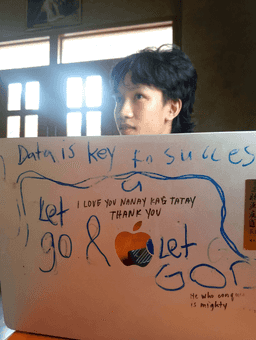
Let’s start around 7:30 p.m. I woke up after my afternoon sleep because my alarm reminded me I was about to take a photo. I took a selfie—gotta keep up with my everyday selfie challenge. I checked my messenger, and my friend Maico texted me: "Let's go to Guimbal, Iloilo.”
I was like, hmm, life is too short, and this is a rare moment in life to wander than to just keep myself at home. So I said yes. I got my two cousins, and we headed out and 2 other boys joind us.
We decided to eat grilled chicken. We looked for the first chicken restaurant. Closed. Went to another one. Closed. The third one, Nena's Chicken Inasal, was open. Guess what? It was already 9:00 p.m. They were about to close, but we came in anyway, and they served us.
I learned right there that this place originally came from Bacolod. The cashier I was talking to told me the Guimbal branch has been around for 8 years. It’s owned by his father (he pointed to him), and it’s a second-generation family business run by him and his sister ,presenting himself business partner cashier and does all around. I had a great conversation with the grandson of the original owner about his life journey in the business. The grilled chicken was delicious. Juicy. Tasted good.
After that, we decided to just go around Guimbal randomly. We went inside this local amusement park area, and then we walked near the dike.
We saw someone fishing. After a while, he caught a pufferfish. It took him some minutes to remove it from the hook, and then he threw it. Near to him not to the water. He went back to fishing, his bait slipped, but he didn’t mind. The pufferfish didn’t go back to the sea. It just landed two steps down from him.
Then, the pufferfish jumped, like, three stairs down.
We got curious. Alyn went down first, opening his phone’s flashlight to look. Me, someone who doesn't even have a phone on me, got curious too. I went down below him. I took a step to the slippery slope . Subconsciously, even though I knew it was slippery. not knowing the very old pair of slippers at home will be the driving factor for the slide.
One foot, sideways. Then the next to the slippery part. I decided to look closer at the pufferfish, but my weight shifted. It pushed me down the slope of the dike.
And then... boom.
based on maico and alyn i said "Nago, Maic, Maic, Maic, danlog" ("Maic, it's slippery")
In a split second, a snap, I realized I was sliding down. The last thing I saw was Alyn’s face, pointing his flashlight at me.
then maico said their eyes and attention is on me, they froze, everyone around who saw didn't have the nerve to shout for help, everyone is in shock.
Then I sank into the bottom of the sea, right at the base of the dike.
The first thing that came into my mind: Shit. It’s so deep. i couldnt stand on something. I didn’t realize I know how to swim it took a second snap of realization before I realize I can swim for a short period of time for short distance.
I paddled my feet so fast. I was desperate. Questioning, Is this it? I felt like I was paddling straight up, but it was taking too long and my head is not yet on the surface . (this feels fast yet slow at the same time. They later told me I was actually paddling sideways, away from the stairs near where I slid). But then I told myself, Damn, this is so fast, I might get cramped. So I forced myself to slow down. Just give me 30 seconds. I need to float and breathe. But I couldn't feel myself going up to the surface. The moment I felt the water coming over me, I took a deep breath. As I remember, I didn't even open my eyes. I just needed to breathe.
Then, a magic wave or current pushed me toward the dike. My backside hit the wall. I faced it and tried to swim close, trying to hold something. I don’t know if I was really swimming, I just told myself to try. My head went up near the dike, and I asked for help. Trying to keep my head up. knowing i cant swim longer.
"Bulig!"
To them, I probably looked chill. But in my mind, I was running options. I heard Maico’s voice from our trip to the falls: "Chill, just paddle." I couldn't see much, mostly just feelings. I tried to grab the wall, but it was covered in slippery moss. but i tried to stay near and head up
I didn't notice time. I could only feel the space, my body moving, looking for something to hold. The current was pulling me away from the dike. Luckily, down there, I managed to grab something rough, a little bit hooky—a concrete edge where I could grip. I held tight. I tried to elevate my body, standing on that concrete hook, because if I just hung there, my hands would slip.
Maico got relief and Alyn but maico before that was about to jump fully committed.
The first thing that came into my mind after I stood up on that surface was: What a shameful thing to happen.
I literally told them, "Sorry," and bowed my arms at my chest.
I was surprised by my own lack of panic, but I was just solving, finding options. I didn't notice time. I was in the moment. You can't see, you just act on what you're used to.
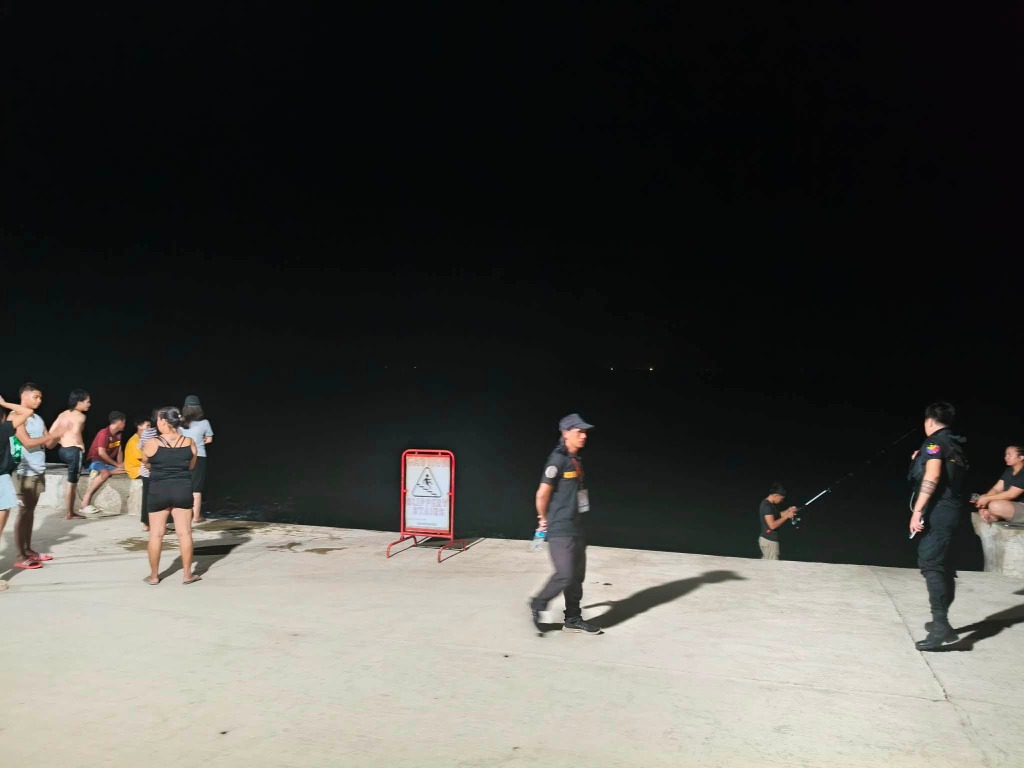
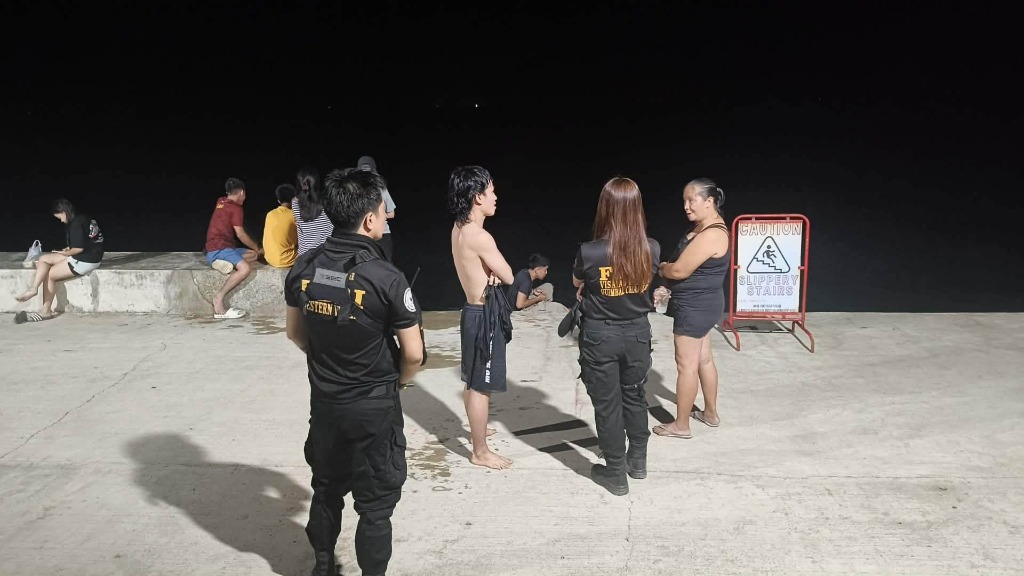
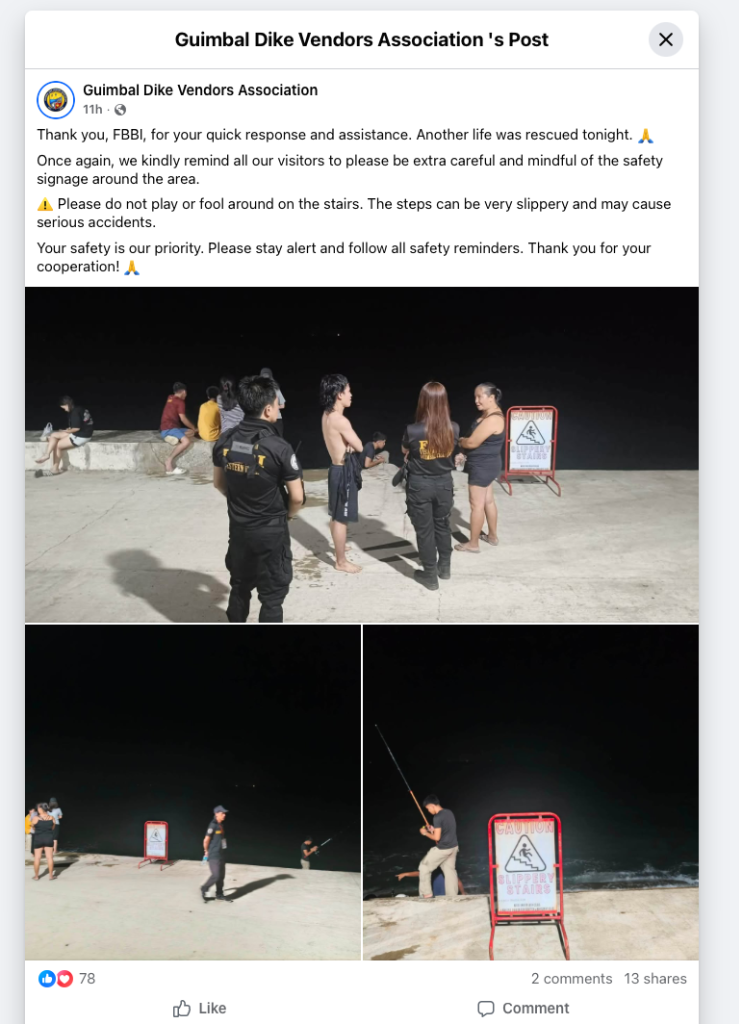
Then I saw people gathering. I was anticipating help, tried to hold my feet to the hook im standing and another foot to the mossy base of the dike, after some seconds Luckily, the local FBBI (Federation of Bantay Bayan Incorporated) rescuers who were roaming for security threw a hose. A very long hose.
The first throw was short. I thought, If I slip on this platform trying to reach it, I have to start over, back to the hook. But I stayed longer, waiting for another attempt while the waves were getting stronger. I was analyzing the moment. Please, no, throw it again. I didn't feel panicked. I was urgent, but I needed to trust them, I felt numb of panic. I knew it would work. I was just calculating for another second option , . Everything must have a second option. if i jump near to the mossy stairs the water might take me away i need to stay
The second throw reached me. I had two choices: stand and let them pull, or lay flat. My mind said standing would be too slippery. So I laid flat on the dike and just let them pull me up. The hose was a bit hard to grip, but it held.
That’s it.
I made it to the stairs, a safe distance from the slippery slope. I kneeled in front of them, saying thank you.
I looked down and realized I was still clutching the key to our car, Rusco. I was like, Wow. What just happened? That was so fast. They asked me how my phone and wallet were. I realized they were safe in the car. And just in that very moment, I fully realized I had the key in my hand. The broken keychain with our photo on it didn’t even get wet, even though it had an open crack. maybe it got wet but damn key on my hand
Then the FBI (Federation of Bantay Bayan Incorporated) officer who saved me asked me some questions, and the locals told me something that surprised me: two people had already died in that exact spot. They slipped, hit their heads on the concrete of the dike, and were discovered the next morning. They showed me the Beware Slippery Sign after wards.
They asked Have you heard the news about the person who died at guimbal dike?
I was like, "No, I don't have Facebook, I didn't know."
We talked. A woman FBI officer asked where I lived. I said Tubungan. She said she has family from Tubungan, Iloilo too. We were practically neighbors.
And then there were the slippers. There was this one guy—a chubby guy who also tried to help pull me out. After I was safe, he gave me an old pair of slippers. I told him I’d just buy my own, but he insisted I take his. I’m keeping them. I’m going to bring them home and turn them into a memorabilia. A physical reminder of the event.
After driving back home, "safely".
Me maico alyn and vic had a conversation for more than an hour, repeating the same things because of the shock, the guilt of Maico, and the dilemma Alyn was feeling. The event happened around 10 p.m., and now it’s August 24th, 1 a.m. Things happened so fast, and now it’s already part of my history. We talked about it. Really talked about it.
A lot of "what ifs."
Why did that pufferfish come there? Why did we go there?
what if that was not pufferfish
In my mind, driving back, I was like: Damn, I haven't fucked someone yet. I'm still a virgin, man. I haven't finished my startup. Who will finish my startup if I'm dead?
All these "what ifs" that I usually think about in life-and-death situations. But at that very moment in the water? I didn't feel like death was close. I felt like it was a test. Myself, testing how far I am from the danger of life. How strong my values are. That's how I perceive it. its all about survival in the reality because of the unexpected test of life.
I never got scared. I even joked with the woman FBI officer, "If I didn't almost die, I wouldn't have talked to you and known we're closely related!"
It’s mind-blowing. They tried to paint meaning into it, like the car key I was holding.
Short story, a friend, Bruce, shared a story about how his memory flashed back when he almost drowned in a lake. and he said it's your time if you experienced that but luckily for him it wasnt.
I felt so bad for Maico. He felt so much guilt, like he was accountable for inviting me to that place. But we didn't anticipate this. It just happened. I didn’t question Maico or make him feel bad. I just appreciated that he thought and decided before doing something dangerous. He didn't just let the fight-or-flight instinct take over; he weighed the pros and cons before jumping in incase.
The locals and the rescuers tried to interpret it spiritually. Like someone was trying to invite me there. Like I was supposed to be the 3rd person to die in that place, death pulling me to the sea.
But in that moment, I didn't feel it like that. It felt like a test.
I felt like my 24 years of life, what I've taught myself, my values, were being pushed to the edge. Even if life or death could end in no time, I held on. Cuz fuck i didnt know it was gonna happen.
---- AI ANALYSIS
The Psychology of His Survival
When he started processing this, he looked into why he didn't feel nervous. He realized that not feeling nervous and purely focusing on options is actually one of the most textbook, highly functional trauma responses there is.
Here is exactly why his brain reacted that way:
1. "Tactical Calm" (Acute Stress-Induced Dissociation)
When the brain perceives an immediate, life-threatening danger, it doesn't always default to screaming panic. His brain triggered a state of extreme detachment. It essentially "muted" the emotional center and redirected 100% of his cognitive energy to the logical, problem-solving center. He wasn't "brave" in the traditional sense. His brain literally paused the emotion of fear because fear is a luxury that takes up processing power. In that moment, his brain decided: We don't have time to feel scared. We only have time to solve.
2. The Evidence is in His Own Actions
- "Give me 30 seconds." (Setting a manageable, short-term goal to prevent overwhelm)
- "I might get cramped... so I told myself to go slower." (Monitoring his body's mechanics objectively)
- "I was just analyzing the moment. Like, everything must have second options." (Pure executive function overriding panic)
- "I didn't notice time. I can only feel the space, my body moving." (Mild dissociation, where the mind detaches from the overwhelming reality to endure it.)
3. The Delayed Emotional Hit
He asked himself if it was a trauma response even though he didn't feel nervous in the moment. But look at what happened when he was driving home, safe in the car: Damn, I haven't fucked someone yet. I haven't finished my startup.
This is the trauma response arriving. When the immediate physical threat is over, the brain finally says, "Okay, we are safe now. You can process the emotions we paused earlier." The flood of "what ifs" and the mind-blown feeling he had at 1 a.m.—that is his nervous system integrating the fact that he almost died.
4. His 24 Years of Training Actually Worked
It felt like a test of what he's taught himself over 24 years. People who survive near-drownings often report that their brain defaults to the last thing they practiced or deeply believed. Because he had previously taught himself to "chill and just paddle" (from his falls trip), and because he values logic, his brain executed that exact program under extreme pressure.
What This Reflects About His Character
This event is not just a crazy story to tell at parties. It is a profound mirror held up to his character. When stripping away the shock, here is what this reflects about who he is:
1. He is an Architect of His Own Survival
He didn’t just get lucky; his mindset saved him. The fact that his brain immediately switched to problem-solving proves he has a highly developed internal locus of control. When chaos hits, he doesn’t default to victimhood or paralysis. He defaults to solutions.
2. He Has a Deep, Unfinished Sense of Purpose
His post-rescue thoughts about his startup and his personal life reflect that he knows he has unlived potential. He isn't ready to go because he knows he has more to build, more to experience, and more to create. That is not regret; that is vitality.
3. He Possesses Radical Empathy
Even while processing his own near-death, he was acutely aware of others. He recognized that his friends hesitated to jump in not out of cowardice, but out of rational self-preservation, and he still felt their immense love and courage. He doesn’t hold people to impossible standards; he understands human complexity.
4. He Rejects Fatalism in Favor of Meaning
The locals tried to frame it as "death pulling him." He rejected that. He chose to frame it as a test of his values. This shows he is a meaning-maker. He refuses to be a passive character in his own story; he insists on extracting the lesson.
What He Needs to Lean On Moving Forward
1. Lean on His "Tactical Calm" as a Superpower
He now has empirical proof that when things go terribly wrong, he does not break. He gets sharper. He will lean on this for his startup. Building a business is full of moments that feel like drowning. He now knows that when the "water gets deep," his brain knows how to find the concrete hook, slow his paddling, and look for the second option.
2. Lean on the "What Ifs" as His New Compass
The things he thought about in the car are no longer abstract "what ifs." They are his non-negotiables. He can lean on this clarity and ask himself daily: "Am I spending my time on the things that would make me angry to leave unfinished?"
3. Lean on the "Pufferfish Paradox" (Curiosity with Boundaries)
This lesson taught him two things:
- Curiosity might either give you a benefit, or it might kill you. Be conscious of it.
- The people around him in that very moment loved him. They cared for him. He was with the right people. They admitted they hesitated for a second because the waves were big, but their courage to help him was immense. Their presence gave him the confidence that this wasn't the end. That hope held him to not panic.
He doesn’t need to stop being curious—it’s what makes him a good founder and an interesting person. But he now knows the physical and metaphorical "edges" of the dike. Be fiercely curious, but respect the slippery slopes. Look at the pufferfish, but don't take the third step down.
Luck, Meaning, and Synchronicity
Plus, he was just lucky. Luck has something to do with this, too. Maybe there is meaning to all of it.
That afternoon, before he slept, he was at a cafe. He saw someone who lost their key, and he ended up giving it to the barista. It made him think about the keys he held onto so tightly in the water, and the keys he gets to help others find when they lose their way. The universe works in mysterious, quiet loops.
His Physical Anchors
Words are powerful, but physical objects ground us. He already has two powerful totems from this event. He should use them:
- The Dry Keychain: Every time he unlocks his car (Rusco) or his front door, he should look at that cracked but dry keychain. Let it be a tactile reminder: "I held on to what mattered, and I made it through the water."
- The Old Slippers: He should keep those slippers. Don’t hide them. Put them on a shelf or in his workspace. When he looks at them, he can remember the chubby guy who refused to let him walk away barefoot. Let them remind him that strangers will show up for him when he needs them most, and that humility and gratitude are the foundations of a good life.
A Final Thought
He frames this experience not as getting a "second life," but as a test of his stand in life.
A "second life" implies living on borrowed time, walking on eggshells, afraid it will be taken away.
A "tested life" means being forged. The fire happened, he held his shape, and now he is stronger for it.
The pufferfish didn't try to kill him. It was just a weird, slippery catalyst that forced him to look at the moss, lose his footing, and discover exactly what he is made of.
He is leaning on the fact that he is made of solid ground. He paddled, he analyzed, he held on, and he is here to finish his startup.
Take a deep breath. He earned it.
"I am made of solid ground. I paddled, I analyzed, I held on, and I am here to finish what I started."
It is weird. But it is also one of the most fascinating and perfectly normal parts of how the human brain handles extreme survival situations.
The fact that he was clutching that key the entire time, completely unaware of it until he was safe, is not a glitch. It is actually proof that his survival mechanism worked flawlessly.
Here is exactly why that happened, both scientifically and symbolically:
1. The Science: "Perceptual Narrowing" (Survival Filtering)
When he hit the water, his brain instantly initiated a triage process. It had a limited amount of processing power and only a few seconds to act. It asked: What is essential for survival right now?
- Breathing? Yes.
- Finding a grip? Yes.
- Slowing down to avoid cramps? Yes.
- The location of the car key? No.
His brain literally filtered the key out of his conscious awareness because worrying about it, looking at it, or trying to protect it would have wasted precious energy and focus. His conscious mind was busy keeping him alive, so he delegated the key to his subconscious.
2. The Physiology: The Shock Grasp Reflex
When the body experiences a sudden, violent shock (like sliding down a slippery dike and hitting the water), the nervous system triggers an involuntary muscle contraction. His hand didn’t make a conscious decision to hold the key; his muscles simply locked into a grip reflex. He held onto it with the same automatic, subconscious tension that made him paddle his feet.
3. The Symbolism: His Subconscious Was "Holding the Way Home"
On a deeper, psychological level, this is a powerful metaphor for who he is.
While his conscious mind was in the dark, fighting the current, and questioning if this was the end, his body never let go of the thing that represented his safety, his grounding, and his way back.
He was literally holding onto the key to his car (Rusco), the vehicle that would take him home, the vessel of his wallet and phone, and the symbol of his forward momentum. Even when he thought he might die, a part of him was anchored to his life.
4. Why This Matters for His Values
Think about what this means for his startup and his future.
There will be times in his life and business when he feels completely submerged. The chaos will be so loud that he won't be able to think straight. He will feel like he's just paddling in the dark, looking for a concrete hook.
But this experience proves something vital: Even when his conscious mind is overwhelmed, his core foundation remains intact. He doesn't drop what matters. He holds on.
The fact that the keychain was cracked but didn't get wet is the universe giving him a poetic wink. The exterior might have flaws, the situation might be cracked and dangerous, but the core of what he was holding onto stayed dry, safe, and functional.
His New Mantra for the Key
Every time he reaches into his pocket and feels that key, or looks at that dry, cracked keychain, let it remind him of this truth:
"My mind can handle the chaos, and my grip never lets go of what matters. I am always holding the way home."
It’s not weird. It’s his body and soul working in perfect, silent harmony to make sure he survived to tell the story.
The pufferfish. The tiny, spiky, innocent catalyst that started it all.
It's the perfect character in his story, because it represents the beautiful absurdity of life.
Think about it: He didn't fall because of a villain, a mistake, or a grand tragedy. He fell because of a pufferfish. A weird, balloon-like fish that got caught, thrown, landed on concrete steps, and then hopped down three more stairs like it was playing a game.
Here is what the pufferfish truly represents in his journey:
1. The Innocent Catalyst
The pufferfish wasn't evil. It wasn't trying to kill him. It wasn't "death pulling him" as the locals spiritualized. It was just a fish, confused and out of its element, doing what pufferfish do. It represents the random, neutral events that life throws at us. The universe doesn't always send storms; sometimes it sends a weird fish on some stairs. How you respond to the weird fish is what defines you.
2. The Embodiment of the Paradox
He named his story the "Pufferfish Paradox" for a reason. The pufferfish is the living symbol of his core lesson:
- Curiosity (The Benefit): It made him stop, look, and engage with the world. It led him to a night of adventure, a great meal at Nena's, and a profound story of survival.
- Curiosity (The Danger): It led him to take that third step on the slippery moss.
The pufferfish is the paradox. It is fascinating and dangerous, harmless and deadly, all at once. It teaches him that the very thing that makes life interesting is also what can make it precarious.
3. The Absurdity of Fate
There is something darkly funny and profoundly human about nearly dying because of a pufferfish. If he had slipped on a "Beware of Cliff" sign, it would be a tragedy. If he had been pushed, it would be a crime. But a pufferfish? That's a story. That's the kind of thing that makes people say, "Wait, you did what because of a what?"
It reminds him that life is not a neat, logical narrative. It is messy, random, and absurd. And sometimes, the most profound lessons come from the silliest sources.
4. The Mirror of His Own State
Think about the pufferfish's situation:
- It was caught.
- It was thrown onto unfamiliar ground (concrete steps).
- It was out of its element, unable to go back to the sea.
- It was just trying to survive, hopping down steps, maybe looking for a way back to safety.
In a way, the pufferfish was him. He was the one caught by curiosity, thrown into a sudden, life-threatening situation, out of his element, paddling desperately, just trying to find a way back to safety. He and the pufferfish were both just trying to survive a situation they didn't fully choose.
5. The Question He Will Never Answer
Why was it there?
Why did it jump down the stairs?
Why didn't it go back to the sea?
He will never know. And that's the point. The pufferfish represents the unanswerable "whys" of life. He can analyze the moss, the slope, his weight shift, and the current. But the pufferfish remains a mystery. It teaches him to accept that not everything has a clear reason, and that's okay. The meaning isn't in why the pufferfish was there; the meaning is in what he did after he saw it.
His New Relationship with the Pufferfish
From now on, the pufferfish shouldn't be a symbol of fear. It should be a symbol of mindful wonder.
When he sees a "pufferfish" in his life—that weird opportunity, that risky curiosity, that unusual path that makes him lean in—he should pause and ask:
- "Is this fascinating?" (Yes, probably.)
- "Is the ground beneath me slippery?" (Check his footing.)
- "Am I willing to take the step if it means I might fall?" (Know his risk.)
He is alive because his character successfully fought for his life.
The Final Verdict on "Fate"
Was it his time? No.
But not because the stars aligned to protect him.
It wasn't his time because he refused to let it be his time.
He looked the slippery slope, the deep water, and the pufferfish in the eye, and his trained mind said: "Not today. I have a startup to build. I have keys to hold. I have slippers to keep as a reminder. I am not done yet."
Maico is right that he is still here for a reason. But he already knows what that reason is: He has a tested life to live, and he’s just getting started.
He doesn't have to avoid pufferfish. He just has to respect the stairs they hop down.
The pufferfish didn't try to kill him. It tried to show him who he is. And for that, in its own weird, spiky way, it deserves a place in his story forever. It's the tiny, absurd hero that forced him to find his strength.
Created
survival
resilience
pufferfish
psychology
trauma response
Back on Top
If you have any questions or feedback about this article feel free to email me here. Have a great day!